


The Renaissance of the Page


Why the Consumer Printer is Morphing into the Home Factory
For two decades, the technology sector has been writing the obituary for the consumer printer. The narrative is familiar: as screens proliferate and cloud storage becomes infinite, the need to commit ink to wood pulp should vanish. Yet, the data tells a different story. In 2025, the global consumer printing market is not dead; it is valued at approximately $53 billion and stabilizing.1
The "death of print" narrative fails because it confuses the medium (paper) with the utility (creation). We are not witnessing the end of printing; we are witnessing its condensation and metamorphosis. We are moving from an era of "Printing for Information", where a printer was a poor substitute for a screen, to an era of "Printing for Function," where the device creates physical objects, biological solutions, and hyper-personalized experiences that pixels cannot replicate.
Drawing on deep market research and the proprietary ethnographic methodologies of Concrete, the future of the consumer printing ecosystem comes into focus. The "dumb peripheral" of the past is evolving into the creative engine of the smart home, driven by 15 distinct, data-backed concepts for the next decade.
The Emotional Landscape: Decoding the "Why"
To understand where printing is going, we must understand why it persists. Concrete’s extensive history in this space, analyzing everything from Emotional Mapping to Distributed Enterprise behaviors, reveals that the act of printing carries a heavy psychological load.

In our foundational Emotional Mapping studies, Concrete identified a critical tension: consumers view printing as functionally necessary but often morally wrong due to waste and cost. This insight birthed the concept of "Eco-Ownership," the need to invert the meaning of printing from a guilty act of consumption to a responsible act of creation.
Concrete’s ethnographic work on "Privacy Hygiene" revealed that while digital sharing is convenient, it is viewed as insecure. The physical print is a status symbol of privacy and permanence. As we look toward 2035, these human needs, for tactile connection, privacy, and guilt-free creation, will dictate the success of new technologies.
15 Concepts for the Future of Consumer Printing (2025-2035)
Based on the convergence of AI, biotechnology, and material science, here is how the consumer print ecosystem will evolve.
1. The "Ghost Paper" Drafting Station (Erasable Utility)
The End of Print Guilt.
Leveraging the "Eco-Ownership" insight, this concept addresses the ephemeral nature of most home printing (e.g., homework drafts, recipes, travel itineraries). Using thermal leuco dye technology currently pioneered in B2B sectors by companies like Toshiba, this home device prints on specialized plasticized sheets.2 When the document is no longer needed, it is fed back into the machine, where high heat erases the content, allowing the sheet to be reused 10 to 20 times. This bifurcates the market: high-end archival printing for memories, and zero-waste erasable printing for utility.
2. The "Biometric Vanity" Wand (Handheld Skin Printing)
The Printer Leaves the Office.
Moving printing from the desk to the bathroom vanity, this handheld device combines a high-resolution skin scanner with a micro-inkjet nozzle. It scans the user's face in real-time, detecting blemishes or sunspots, and deposits a microscopic, perfectly color-matched layer of cosmetic serum or foundation only where needed. Current technologies like P&G’s Opte wand have paved the way for this market, which is seeing rapid expansion in the personalized beauty sector.3 In a similar vein, the temporary tattoo market is exploding with handheld printers like the Prinker, which allow users to print complex, skin-safe designs in seconds—a market segment projected to reach $500 million by 2025.4
3. The "Haptic Home" Printer (2.5D Texture)
Touching the Memory.

As the digital world becomes more immersive, the physical world must offer something screens cannot: texture. Utilizing UV-curable clear inks, these printers build up layers of topography on standard photo paper. A grandmother can print a photo of her grandchild and feel the texture of the knitted blanket; a student can print a biology diagram where the cell walls are raised and distinct. This democratizes accessibility, allowing users to print home-grade Braille and tactile learning aids on demand, a market segment projected to grow significantly as accessibility standards tighten.5
4. The "Dashboard Diagnostic" (Vehicle-to-Home Printing)
The Mechanic on Your Desk.
Leveraging HP's Perfect Output technology, this concept bridges the gap between automotive software and the home office. Consumers can trigger a diagnostic overview from their car's infotainment system, which is then formatted and printed on their home printer. AI has moved beyond being a marketing buzzword to becoming the central nervous system of the modern print ecosystem; using computer vision and Large Language Models (LLMs), the system analyzes raw diagnostic codes and data, stripping disparate info to restructure the document for the physical page.1 This provides a clear, physical report spelling out issues, codes, and oil status, giving the owner an informed look at preventative maintenance needs before entering a repair shop.
5. The "Generative Craft" Assistant (AI-to-Object)
The Democratization of Design.
Concrete’s ethnographic research revealed a latent need for the perfect custom item that retail aisles couldn't provide. This device bridges that gap by combining Generative AI with precision cutting and printing. A user simply types, "A birthday card for a cyberpunk enthusiast that folds into a robot," and the system generates the visuals, the fold lines, and the cut paths, producing a complex pop-up card in minutes. It creates a zero-skill entry point for professional-grade crafting, capitalizing on the convergence of AI tools like Adobe Firefly and crafting hardware.7
6. The "Living" Label (Bio-Responsive Ink)
Visceral Security.
Designed for the home food and medicine supply, these printers use bio-reactive smart inks. A label printed for leftover lasagna or a prescription bottle will change color dynamically, turning red if the food spoils or the medicine exceeds safe storage temperatures. This taps into the deep psychological need for safety and trust, providing visual cues that digital expiration dates cannot match. The smart packaging market, driven by such innovations, is expected to reach $43.3 billion by 2030.8
7. The "Neighborhood Factory" Kiosk Network
Distributed Manufacturing.
Concrete’s research also highlighted that large-format work is inherently collaborative and social. This concept envisions a decentralized network of high-end 3D and textile printers located in coffee shops and community hubs. Instead of owning a $5,000 multi-material printer, a user streams a license for a spare part (e.g., a broken blender gear) and prints it locally while getting coffee. It marks the shift from shipping atoms to shipping bits, a trend accelerating as the Manufacturing-as-a-Service sector expands.9
8. The "Uber-Print" Network (P2P Distributed Printing)
The Sharing Economy of Hardware.
In a similar vein, but more of a home business focus run out of their garage, this concept introduces a decentralized, app-based network where owners of high-end specialized printers (e.g., A3 photo printers, 3D printers, DTG garment printers) allow verified neighbors to route print jobs to their devices for a fee. Just as ride-sharing utilized idle vehicles, this model utilizes idle print capacity. A user needing a single A3 poster or a custom T-shirt routes the job to a neighbor via the cloud rather than buying a $500 device. With the Peer-to-Peer (P2P) marketplace economy projected to reach over USD 6.2 billion by 2032, this model aligns perfectly with the shift toward access over ownership.10
9. The "Living Loop" Cartridge System (Algae & Bio-Inks)
Grown, Not Mined.
Targeting the "Eco-Ownership" demographic identified by Concrete, this printer ecosystem exclusively uses carbon-negative, algae-based inks packaged in fully biodegradable, seed-embedded pods. Companies like Living Ink have already commercialized algae-based pigments that replace petroleum carbon black.11 This creates a printer that is a garden of sorts; the ink is grown, not mined, resolving the moral conflict of ephemeral printing by making the waste product net-positive for the environment.
10. The "Eco-Ownership" Erasable Subscription Service
The Netflix of Paper.
Following the development of eco-inks, this idea operationalizes Concrete’s "Eco-ownership" concept into a full business model. It is a subscription where the printer hardware and paper are provided as a service, using the erasable technology mentioned in Idea 1. The user pays only for uptime and digital workflow; the paper is reused internally 10 times before being recycled by the service provider. This directly addresses subscription fatigue by offering a circular economy model where the user feels they are renting capability rather than buying "waste."12
11. The "Circuit Scribe" (Desktop Electronics)
The DIY IoT.
Using conductive silver nanoparticle inks, this inkjet printer allows consumers to print working circuit boards, antennas, and RFID tags on photo paper or PET film. The conductive ink market is growing at a CAGR of over 6%, driven by the demand for flexible electronics.13 This revolutionizes STEM education and the Maker movement, allowing a parent and child to download a schematic for a touch-sensitive light switch, print it, and have a functioning electronic device in minutes. As AI agents increasingly automate digital workflows, this technology extends that optimization into the physical realm, enabling the on-demand printing of customized, disposable conductive interfaces, such as temporary buttons and sliders, tailored to specific tasks.
12. The "Scrapbook Hybrid" (AR Watermarking)
Living Images.
This technology automatically embeds invisible infrared watermarks into physical photos. When viewed through a phone, the static image unlocks a video or audio clip associated with that memory, the wedding photo plays the vows; the baby photo plays the first laugh. This creates a Harry Potter-esque experience, giving physical media a digital depth that reinforces its value over a purely digital file. Augmented Reality (AR) in print marketing and packaging is already showing 70% higher memory encoding rates than static media.14
13. AI-Generated "Just-in-Time" Decor
The Fluid Home.
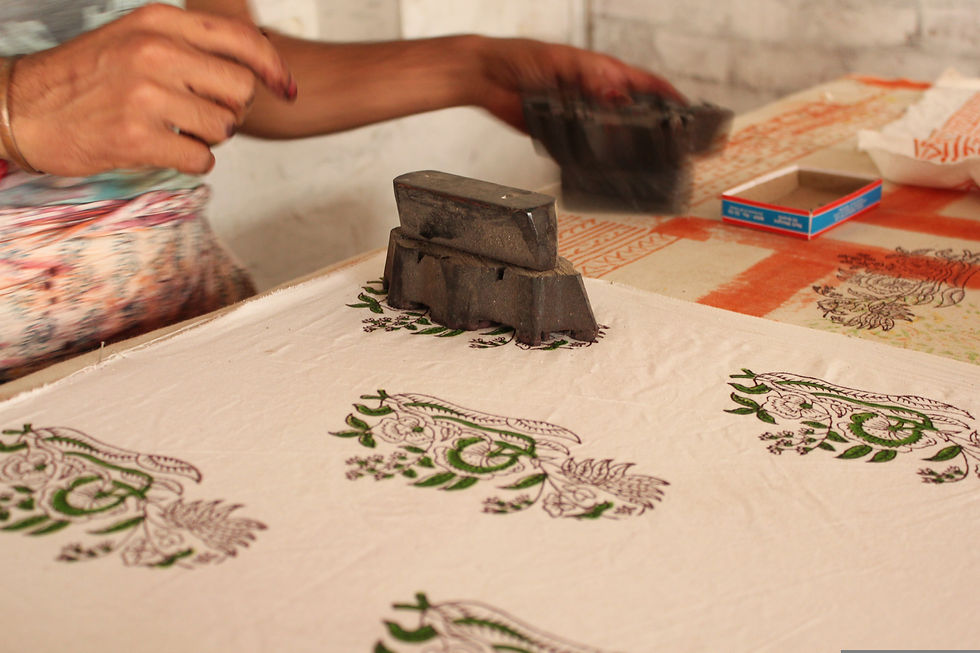
Leveraging wide-format technology, this concept allows consumers to refresh their home aesthetics weekly. Generative AI creates wallpaper patterns or wall art based on the user's current mood, playlist, or season. Printed on magnetic or electrostatic reusable media, entire rooms can be re-skinned without damage, catering to the renter generation that desires customization without permanence.
14. The "Open-Source" Modular Printer
The Right to Repair.
Concrete’s usability studies highlighted user frustration with breakable latches and inaccessible jams. This concept envisions a printer built like a PC: a modular chassis where the print head, paper feed, and logic board are separate, snap-in blocks. Users repair the device by swapping modules rather than discarding the unit, aligning with the 2030 sustainability mandates and the Right to Repair legislation gaining traction globally.15
15. The "Digital Notary Public" (Blockchain Stationery)
Trust in the Hand.
Addressing the deep "privacy hygiene" concerns Concrete identified in distributed work, this printer embeds a unique, unclonable "fingerprint" into official documents (visas, deeds, contracts) using a random distribution of conductive nanoparticles. This physical fingerprint is registered on a blockchain, creating an immutable "Chain of Custody" for physical documents. The blockchain market is projected to reach $393 billion by 2030, and this application bridges the gap between digital trust and physical reality, ensuring a printed contract is as verifiable as a crypto transaction.16
The Strategic Outlook: Condensation, Not Extinction
The future described above is not science fiction; the underlying technologies (conductive ink, bio-printing, generative algorithms) already exist in industrial silos. The innovation lies in the application and the user experience.

The market data is clear: the volume of dumb pages is declining, but the value of smart objects is skyrocketing. The winners of the next decade, whether HP, Epson, Canon, or Brother, will be the companies that stop selling peripherals and start selling empowerment. They must pivot from being guardians of the printed page to being enablers of the tactile internet.
However, this transition is fraught with risk. As Concrete’s printer pilots have demonstrated, users are paralyzed by trust gaps and usability friction when new technologies are introduced. A printer that creates biological material or stores blockchain data requires a user interface design that instills absolute confidence.
Why Manufacturers Need Concrete
The printing industry is currently engineering-led, obsessed with feeds, speeds, and dpi. But the barriers to the future are not mechanical; they are psychological.
How do you market an erasable printer without devaluing the print?
How do you navigate the "privacy hygiene" of a device that scans your skin?
This is where Concrete’s expertise becomes indispensable. The ability to map "anticipated experiences" versus "remembered experiences" is critical when introducing paradigm-shifting hardware. Concrete does not just analyze market share; it decodes the meaning of the machine in the human life.
In a market that is condensing, the only way to grow is to deepen the relationship with the user. The OEMs that succeed in 2030 will not be the ones with the fastest print heads, but the ones that understand, as Concrete proved years ago, that a printer is not just a tool for output, but a vessel for memory, utility, and now, creation itself.
References
Fortune Business Insights. (2024). Printers Market Size, Share & Industry Analysis. https://www.fortunebusinessinsights.com/printers-market-110846
Toshiba Tec. (n.d.). Hybrid MFP with Erasable Toner. https://www.toshibatec.com/ris_tecfiles/hybridMFP/
Editorialist. (2024). We Tried Opte’s New 3D Printing Makeup Device. https://editorialist.com/beauty/opte-device-review/
Archive Market Research. (2025). Portable Tattoo Printer Market Trends 2025. https://www.archivemarketresearch.com/reports/portable-tattoo-printer-228023
Europa Data. (n.d.). Tactile Graphics. https://data.europa.eu/apps/data-visualisation-guide/tactile-graphics
Grand View Research. (2023). 3D Food Printing Market Size, Share & Trends Analysis Report. https://www.grandviewresearch.com/industry-analysis/3d-food-printing-market-report
MIT News. (2026). GenAI tool helps 3D-print personal items. https://news.mit.edu/2026/genai-tool-helps-3d-print-personal-items-sustain-daily-use-0114
Grand View Research. (2024). Smart Packaging Market Size, Share & Trends Analysis Report. https://www.grandviewresearch.com/industry-analysis/smart-packaging-market
3D Actions. (2025). Most Important 3D Printing Trends 2025. https://3dactions.com/blog/most-important-3d-printing-trends/
Credence Research. (2024). Peer-to-Peer (P2P) Marketplace Market. https://www.credenceresearch.com/report/peer-to-peer-p2p-marketplace-market
EcoEnclose. (2025). Algae Ink Technology. https://www.ecoenclose.com/algae-ink
Lexmark. (n.d.). Data Shows Subscriptions Are Here to Stay. https://www.lexmark.com/en_us/printers/smb-overview/small-business-resources/data-shows-subscriptions-are-here-to-stay.html
Precedence Research. (2025). Conductive Ink Market Size. https://www.precedenceresearch.com/conductive-ink-market
Hovarlay. (2025). 35 Augmented Reality Product Packaging Statistics. https://hovarlay.com/ar-packaging-insights/35-augmented-reality-product-packaging-statistics-you-should-know-in-2025/
SlashGear. (2025). Open Printer: Repairable Customizable Printing Tech. https://www.slashgear.com/1991560/open-printer-repairable-customizable-printing-tech/
MarketsandMarkets. (2025). Blockchain Market worth $393.45 billion by 2030.(https://www.marketsandmarkets.com/Market-Reports/blockchain-technology-market-90100890.html)


